
The quiet signals pets give us
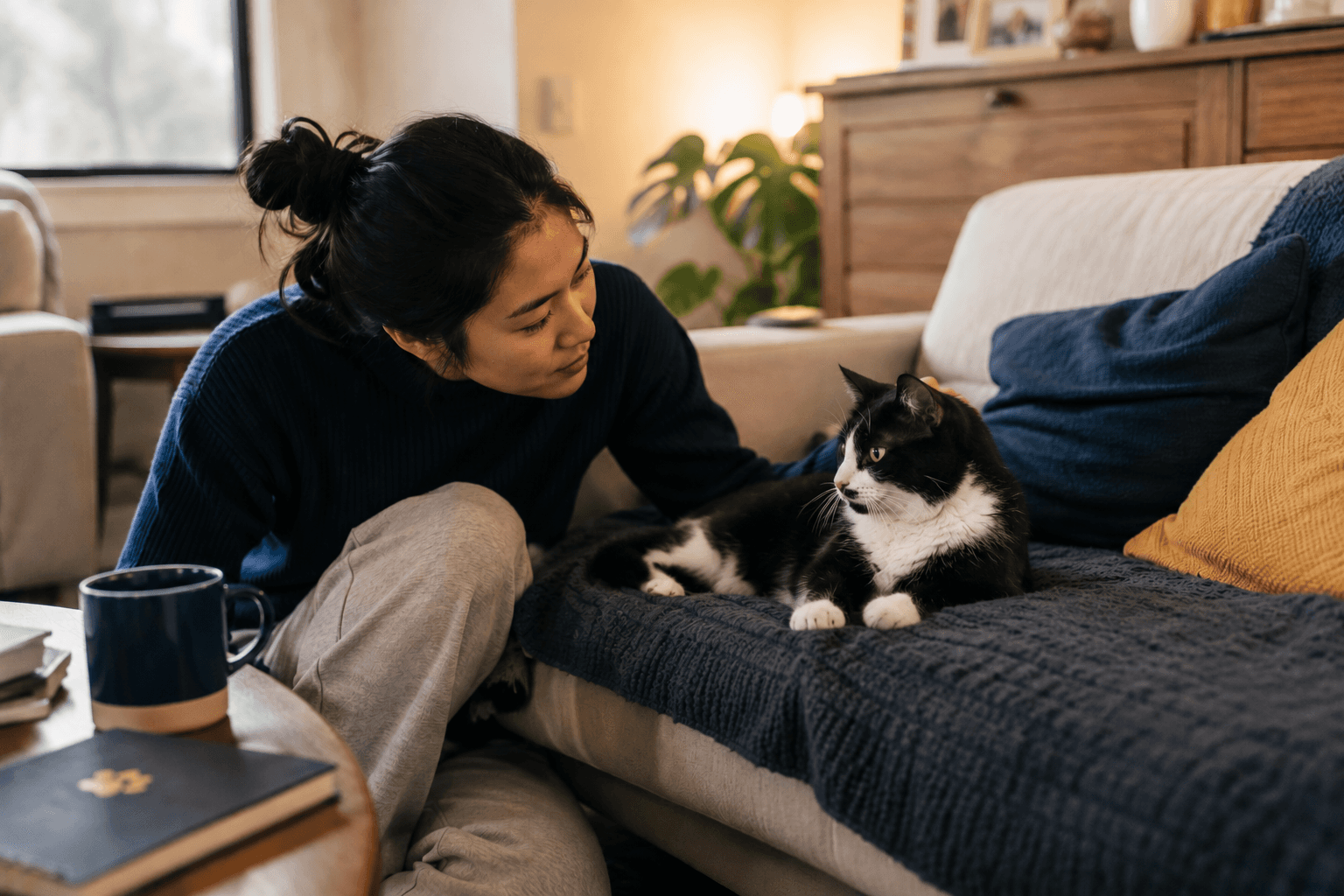
Your dog eats a little slower than usual. Your cat naps in a new spot for a few days straight. Nothing dramatic, nothing that screams emergency — just small shifts that are easy to explain away. Most pet health problems don't announce themselves. They show up first as quiet changes in appetite, energy, and routine, and catching them early is often the difference between a simple vet visit and a complicated one.
Notice Changes in Appetite Before They Become Patterns
Appetite is one of the clearest windows into how a pet is feeling, but it's also the easiest signal to miss because it changes gradually. A dog who used to finish his bowl in thirty seconds now takes five minutes. A cat who always begs at the counter stops showing up at dinnertime. One off day usually means nothing. Three or four in a row is information.
The fix isn't constant worry — it's a simple habit. Notice how much food is actually left in the bowl once or twice a week, not just whether your pet showed up to eat. If a change sticks around longer than a few days, that's the moment to mention it at the next vet visit, not wait for it to resolve on its own.
Watch for Energy Shifts That Don't Match the Day
Every pet has an energy baseline — the amount of zoom after a walk, the enthusiasm for a favorite toy, how quickly they settle after playtime. When that baseline shifts and stays shifted, it's worth paying attention to. A normally energetic dog who seems reluctant to jump on the couch. A cat who used to greet you at the door and now stays curled up in another room.
These changes are subtle because pets can't tell you they're tired, sore, or not feeling right — they just do less of what they normally do. The signal isn't one quiet afternoon. It's a pattern that holds for a week or more, especially when it's paired with a change in appetite or sleep.
Track Routine Disruptions as Health Data
Pets are creatures of habit, and disruptions to that habit are often the earliest sign something's off. A cat who suddenly avoids the litter box. A dog who wakes up at odd hours instead of sleeping through the night. Bathroom habits that shift out of nowhere. None of these are dramatic on their own, but together they build a picture worth taking seriously.
The easiest way to catch these shifts is to keep a simple, shared log — a note on the fridge, a shared phone note, whatever's easiest to update. Write down anything unusual: skipped meals, a missed walk, a new hiding spot. On their own, these entries look random. Read back over two weeks, they often reveal a pattern before it becomes an emergency.
Loop In Whoever Else Cares for Your Pet
Quiet signals are easiest to miss when pet care is split across people. A partner handles morning feeding, a pet sitter covers the evening walk, a family member takes weekend duty — and each of them sees only a slice of the picture. The dog who seems fine at 7 a.m. might be sluggish by 6 p.m., and nobody connects the two unless someone's comparing notes.
Make it easy for everyone involved to flag what they notice, even if it seems minor. A shared note, a quick text, a two-line update after a walk — the format matters less than the habit of actually sharing it. When everyone reports what they see, small signals stop getting lost between shifts.
Act on the Signal Instead of Waiting It Out
Once a pattern shows up — appetite, energy, or routine — the next step is straightforward: call the vet and describe what you've noticed, with specifics. "Not himself" is harder to act on than "eating half his usual amount for four days and skipping his evening walk." Specific observations help a vet figure out what's worth investigating and what's likely nothing.
If a vet visit leads to a new prescription, a PetRx Prescription Savings Card is worth having ready. It's free, never expires, and works at over 80,000 pharmacy locations nationwide — up to 80% off with no activation and no insurance required. Catching something early often means starting treatment sooner, and having the card on hand means cost isn't a reason to delay filling it. If the visit turns into a conversation about ongoing or unexpected care, a Pet Insurance Quote is worth a look too, so coverage isn't something you're researching for the first time mid-crisis.
Conclusion
Pets communicate constantly — just not in words. The dip in appetite, the slower walk, the new hiding spot are all information, and the only real skill involved is paying attention long enough to notice the pattern. Build a simple habit of tracking these signals, share them with anyone else who cares for your pet, and act on them before they turn into something bigger. Your pet is family, and the quiet moments are often where the most important care decisions start.