
How to prep for a new puppy
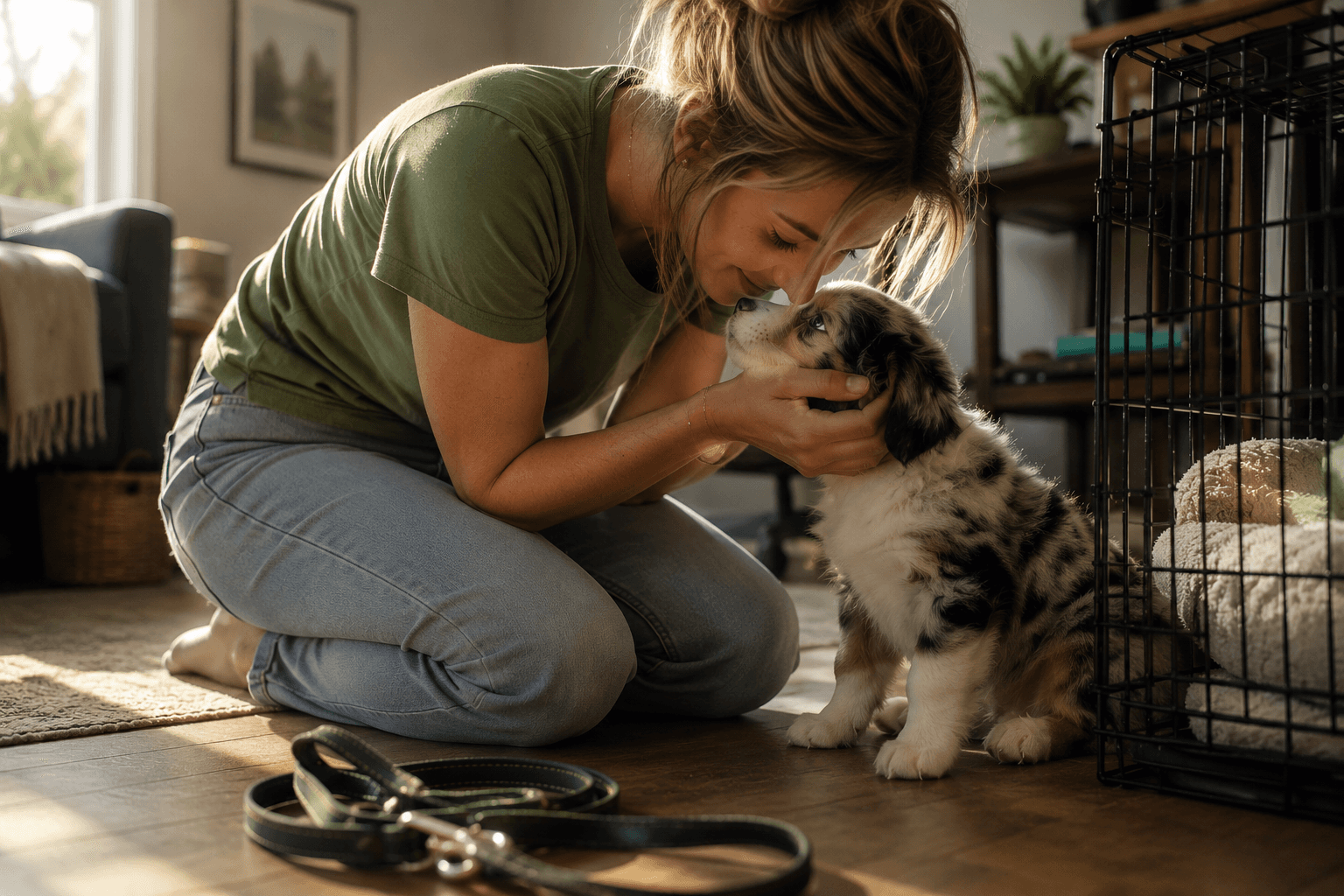
You've picked the puppy. You've probably already imagined the couch photos and the walks around the block. What's easy to skip past is the week before pickup, when a handful of small decisions — where they'll sleep, who's calling the vet, what happens if a prescription comes up sooner than expected — quietly determine whether the first week feels manageable or chaotic. A little setup now saves a lot of scrambling later.
Set Up the Space Before the Puppy Arrives
A new puppy doesn't need a fully decorated corner of the house — they need a space that's safe, contained, and ready before they walk in the door. Pick one area for a crate or pen, put down something washable, and puppy-proof anything within reach: cords, shoes, anything chewable at nose height.
Decide on the basics ahead of time — food brand, bowls, a leash and collar that actually fit a small dog, and a few toys that won't fall apart in a day. Buying these after the puppy arrives means doing it exhausted, at 9pm, because you forgot. Buying them the week before means one less errand competing with everything else.
Find a Vet Before You Need One
Most first-time puppy owners wait until something feels off to think about a vet. It's worth reversing that order. Research clinics near you, check hours, and get a first appointment scheduled before pickup day — most puppies need an initial checkup and vaccinations within the first couple weeks anyway, so you're not searching for a vet under pressure the same week you're also handling a new puppy.
Ask about their after-hours policy and whether they refer to a specific emergency clinic. You likely won't need that number in the first week. Having it already saved means you're not looking it up while also trying to calm down a scared puppy.
Have a Plan for Prescriptions Before One Shows Up
Puppies often leave that first vet visit with something — flea and tick prevention, a dewormer, occasionally an antibiotic if something minor turns up during the exam. It's easy to assume you'll deal with cost when you get there. It's better to already know where you're filling it and what it'll cost.
A PetRx Prescription Savings Card is worth having in your wallet before that first appointment, not after. There's no activation and no fees — you just show it at the pharmacy counter and save up to 80% on the spot. It's accepted at more than 80,000 pharmacy locations nationwide, so there's a good chance whatever pharmacy is closest to your vet already takes it. And since it never expires, it's not a one-time discount — it's there for every refill after this one too.
Loop In Whoever Else Will Be Involved
New puppies rarely stay a one-person job for long. A partner takes the early morning outings, a roommate covers a feeding while you're at work, a family member watches the puppy for an afternoon during that first chaotic week. If the plan only exists in your head, it falls apart the first time someone else has to run it.
Write down the basics somewhere everyone can see: feeding schedule, any medication and dose, the vet's phone number, and where the savings card is if a refill comes up. Mention that the card is free to use and doesn't require any sign-up on their end — so whoever's picking up a prescription isn't stuck figuring that out mid-errand.
Think Ahead to the Costs Beyond the First Visit
The first vet visit is rarely the only one. Puppies get sick, chew things they shouldn't, or need a follow-up sooner than expected — and those visits don't always come with advance notice. It's worth looking into a Pet Insurance Quote before you're standing in an exam room hoping the estimate isn't too high.
This doesn't mean assuming the worst. It means knowing your options ahead of time, so an unexpected illness or accident is a decision you've already thought through instead of one you're making cold, under stress, with a scared puppy in your lap.
Conclusion
The first week with a new puppy moves fast, and most of the stress comes from decisions you didn't make ahead of time — where they'll sleep, who's calling the vet, what a prescription actually costs. None of the steps here take long on their own. Handled before pickup day, they turn a chaotic first week into one you can actually enjoy. Your puppy is about to become family — the prep work is what lets you focus on that instead of scrambling to catch up.