
Choosing routines that actually stick
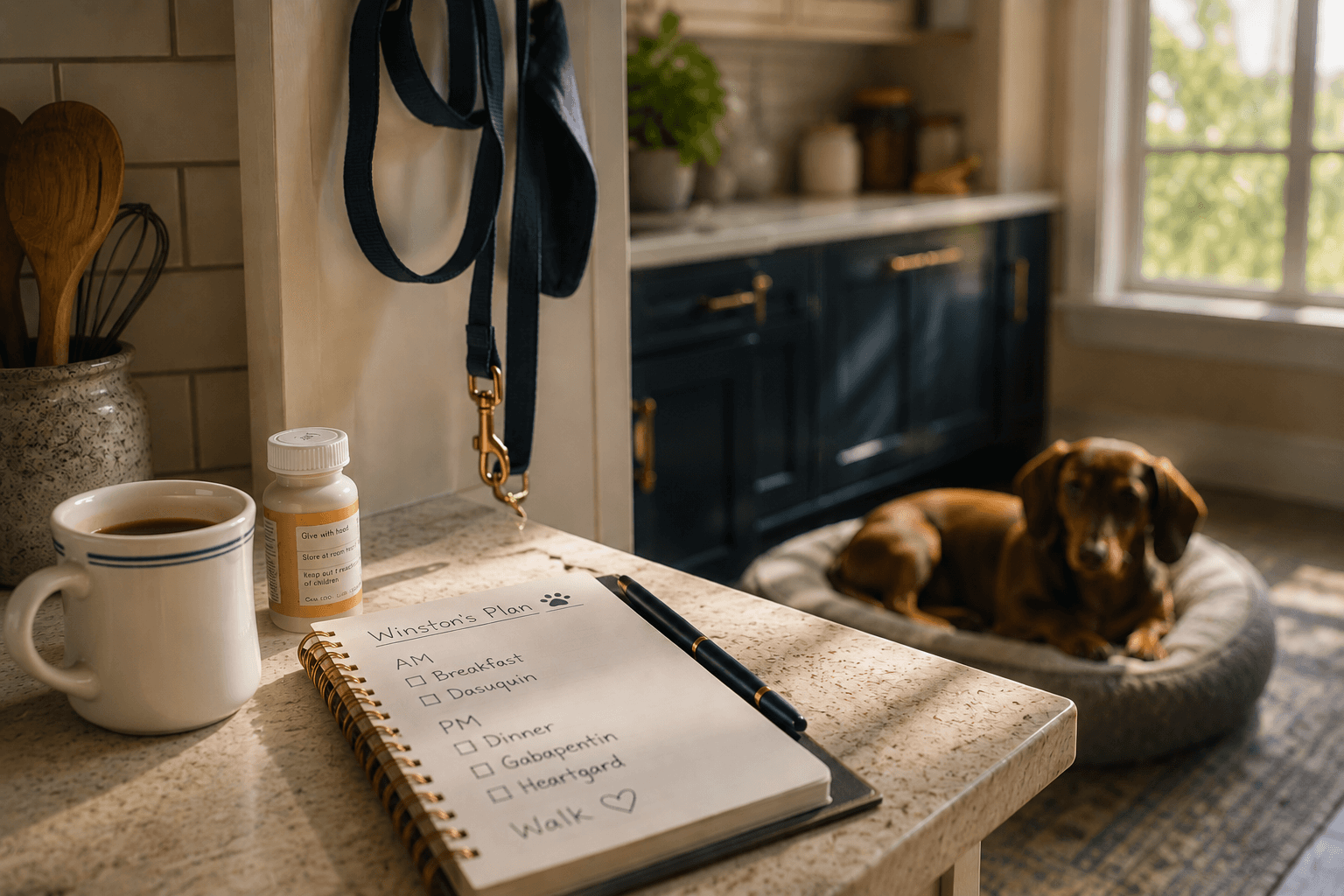
Most pet care routines don't fail because they're too hard. They fail because they were never built around how your household actually runs. A medication schedule that ignores your work hours, a feeding routine that assumes someone's always home by six — these collapse within a week, not because you weren't disciplined enough, but because the plan was wrong for your life. The fix isn't more willpower. It's choosing a routine that fits the shape of your days instead of fighting it.
Start With What Already Works
Before adding anything new, look at what your household already does on autopilot. Coffee gets made. Someone checks the mail. The dog gets walked before work, most days, without anyone deciding to do it. These are your anchors — moments that happen reliably, without a reminder.
Pet care routines stick best when they attach to an anchor that already exists, rather than living as a separate task competing for attention. A medication dose next to the coffee maker. A feeding schedule that matches when someone's already up and moving. You're not building a new habit from scratch — you're borrowing the reliability of one that already works.
Match the Routine to Who's Actually Home
A routine designed for a stay-at-home schedule won't survive a household where everyone's out by 8 a.m. and back after 6. If your realistic window for a midday medication dose is nonexistent, don't build a plan that depends on it — build one around morning and evening instead, even if that's not what the label technically suggests, and confirm the adjustment with your vet.
The same goes for who's actually present to do the task. If one person handles mornings and another handles evenings, the routine needs to be legible to both — not just memorized by whoever set it up. Write it down somewhere visible: a shared note, a calendar reminder, a checklist by the food bowl. The format matters less than making sure the routine doesn't live only in one person's head.
Build In the Cost Side, Not Just the Task Side
A routine that only accounts for feeding times and medication doses is incomplete — it ignores the part that usually causes the most friction: cost and logistics. Refills that require a special trip. Prescriptions that turn into a surprise at the pharmacy counter. These aren't scheduling problems, but they'll break a routine just as fast as a missed dose.
This is where a PetRx Prescription Savings Card earns a permanent spot in the plan. It's free, requires no activation, and works at more than 80,000 pharmacy locations nationwide, so refills fit into whatever pharmacy run you're already making — no detour required. Because it never expires, it's a detail you set up once and never have to revisit, which is exactly what a sticky routine needs: fewer moving pieces, not more.
Design for the Person Filling In, Not Just for You
Every routine gets tested the day the usual person isn't available — a pet sitter, a partner traveling for work, a family member covering while you're out of town. Routines that only work for the person who built them tend to fall apart the moment someone else has to run them.
Write instructions as if explaining them to someone with zero context: how much food, what time, which medication and dose, and where to find the savings card if a refill comes up. If you've used Rx Price Lookup to compare pharmacy prices ahead of time, leave that note too, so whoever's filling in doesn't have to start from scratch. A routine that only works when you're the one doing it isn't a system — it's a dependency.
Plan for the Days the Routine Gets Tested
Even a well-built routine will get knocked off course — a missed dose, a new medication, an unexpected vet visit. What makes a routine durable isn't that it never breaks, but that it's easy to get back on track when it does.
Keep a running note of any changes: a new prescription, a dosage adjustment, a diagnosis that affects daily care. If an unexpected illness or injury turns into a bigger expense, a Pet Insurance Quote is worth having looked into before that moment arrives, so cost isn't one more thing to figure out while you're already stretched thin. The goal isn't a routine that survives everything untouched — it's one flexible enough to bend without falling apart.
Conclusion
A pet care routine sticks when it's built around your household's actual rhythm, not an idealized version of it. Anchor new habits to routines that already run on autopilot. Make instructions legible to anyone who might step in. Handle the cost side — refills, pricing, coverage — with the same intention as the daily tasks. Your pet is family, and the systems around their care should hold up on the ordinary days and the hard ones alike.